Silk is a natural fiber produced by silkworms and has been valued for centuries for its smooth texture, strength, and natural luminosity. The long continuous filaments created by the silkworm produce threads that can be woven into fabrics with exceptional softness and fluid drape.
Because silk fibers reflect light naturally, silk fabrics often appear luminous while remaining lightweight and breathable. Throughout history silk has been associated with refinement and craftsmanship, and it continues to be used in garments, scarves, and textiles that combine elegance with natural comfort.
Mulberry silk is considered the finest and most widely produced form of silk. It is created by silkworms that feed exclusively on mulberry leaves, producing fibers that are smooth, strong, and uniform. The resulting fabric is exceptionally soft and naturally luminous.
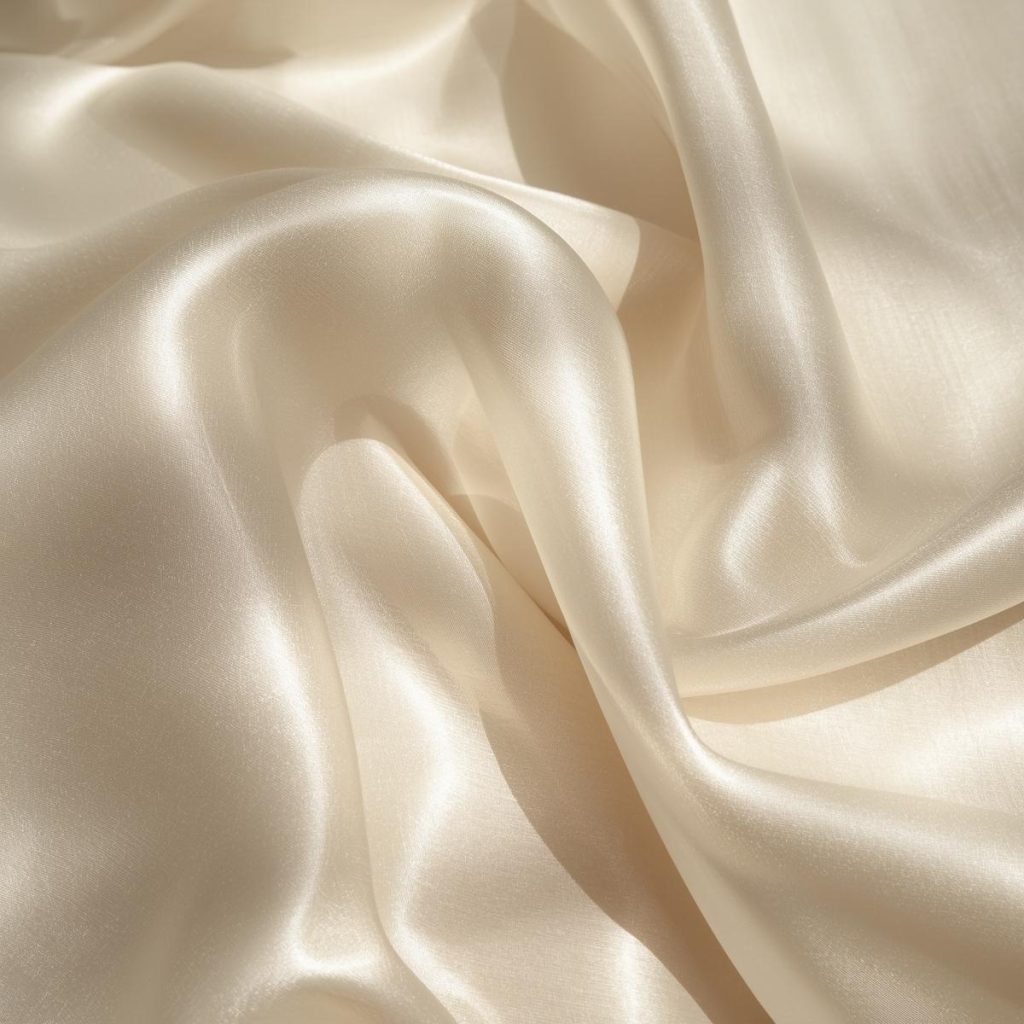
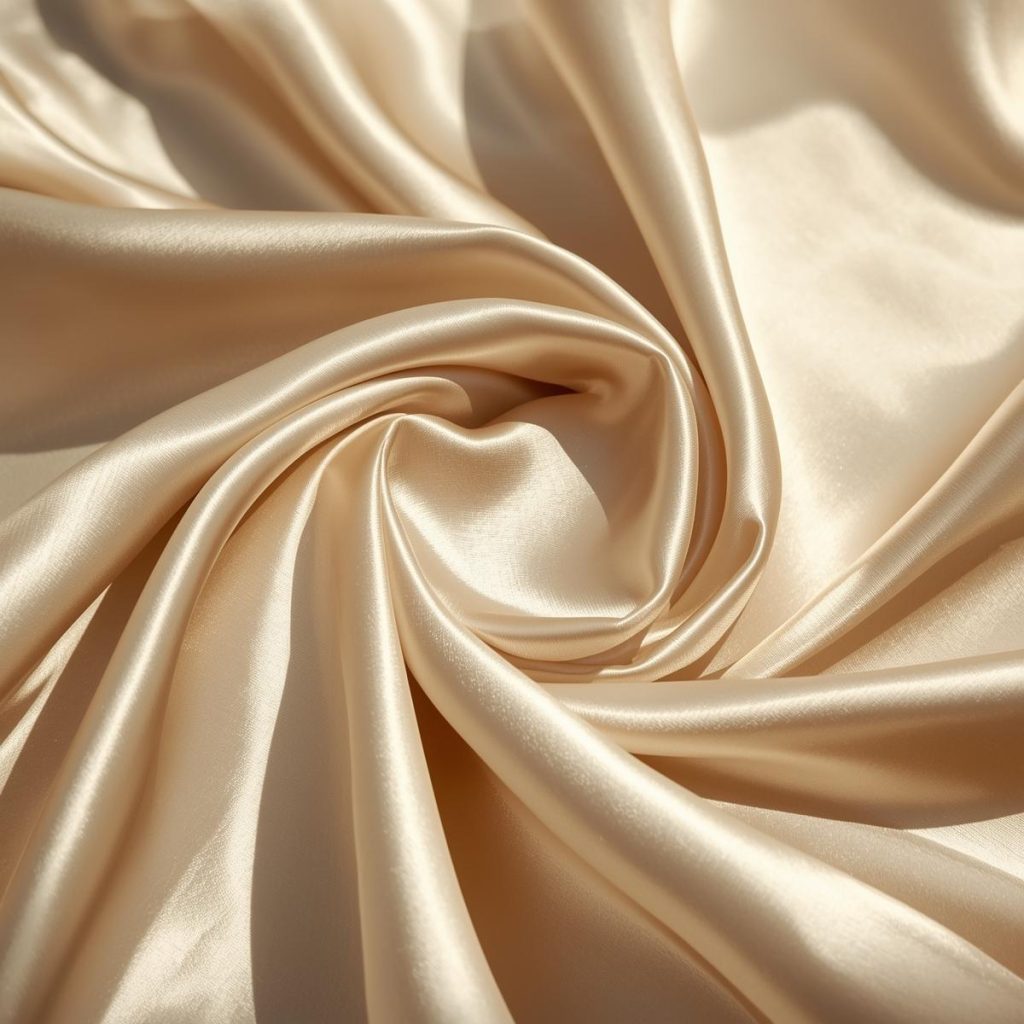
Silk charmeuse is known for its smooth surface and luminous sheen. One side of the fabric reflects light beautifully while the reverse has a softer matte finish. Its fluid drape makes charmeuse a popular choice for elegant garments and refined textiles.
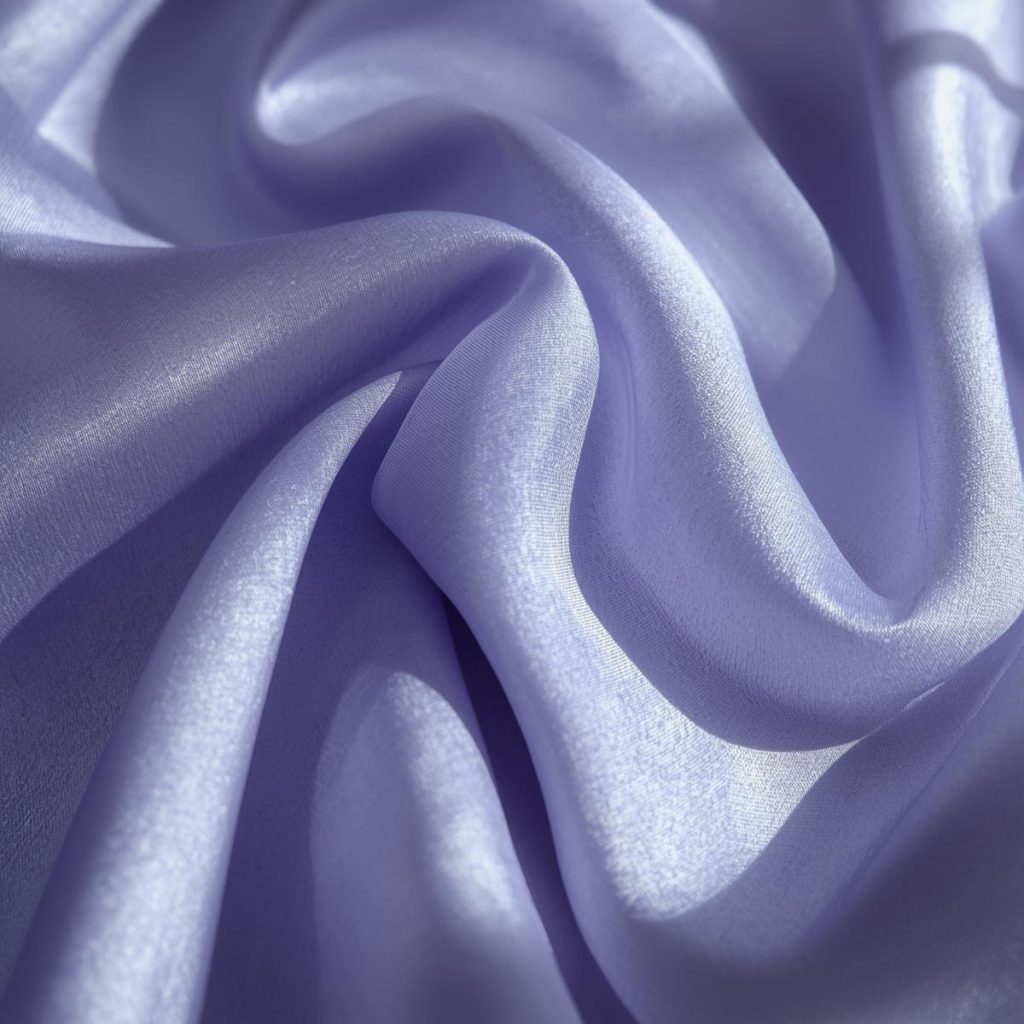
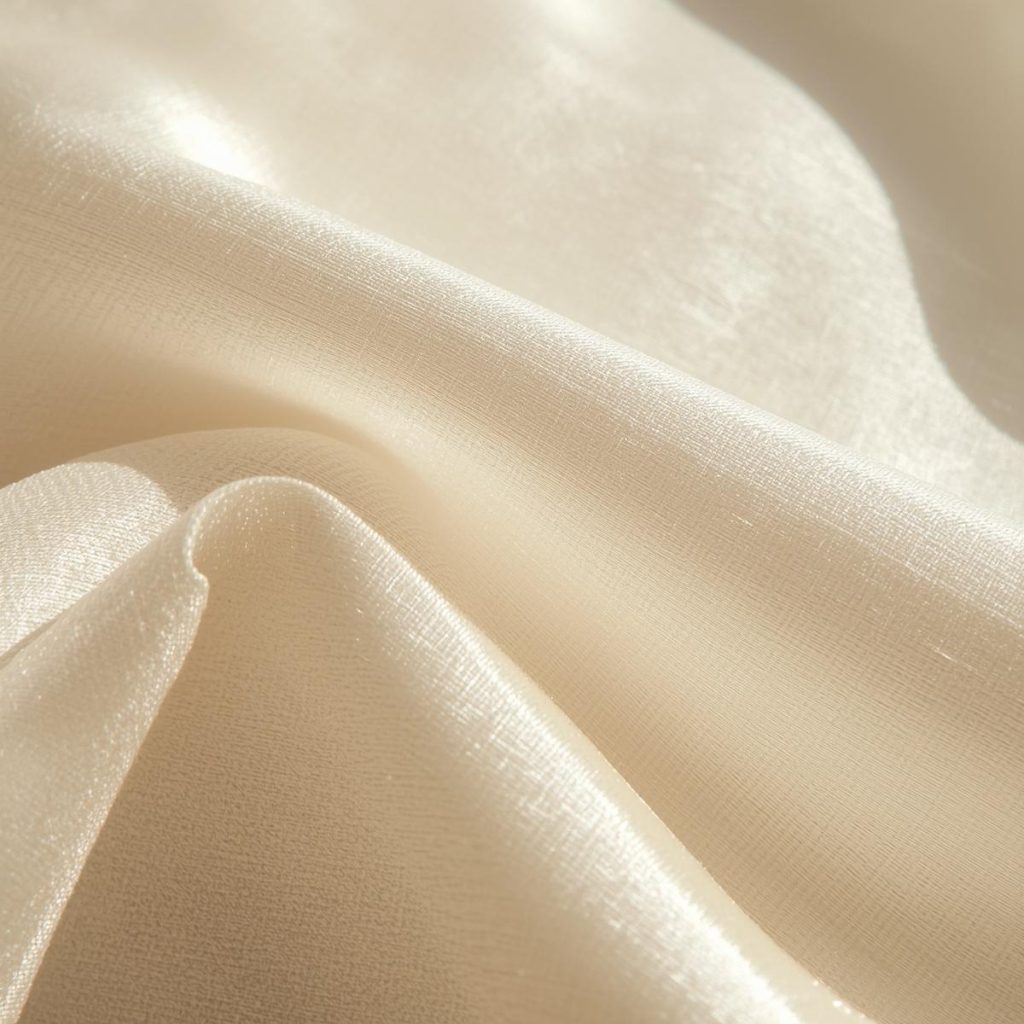
Silk crepe is distinguished by its subtle grainy texture and graceful drape. The fabric has a matte appearance that gives it a quiet elegance while maintaining the softness of silk fibers. Silk crepe is often used in garments that benefit from movement and softness.
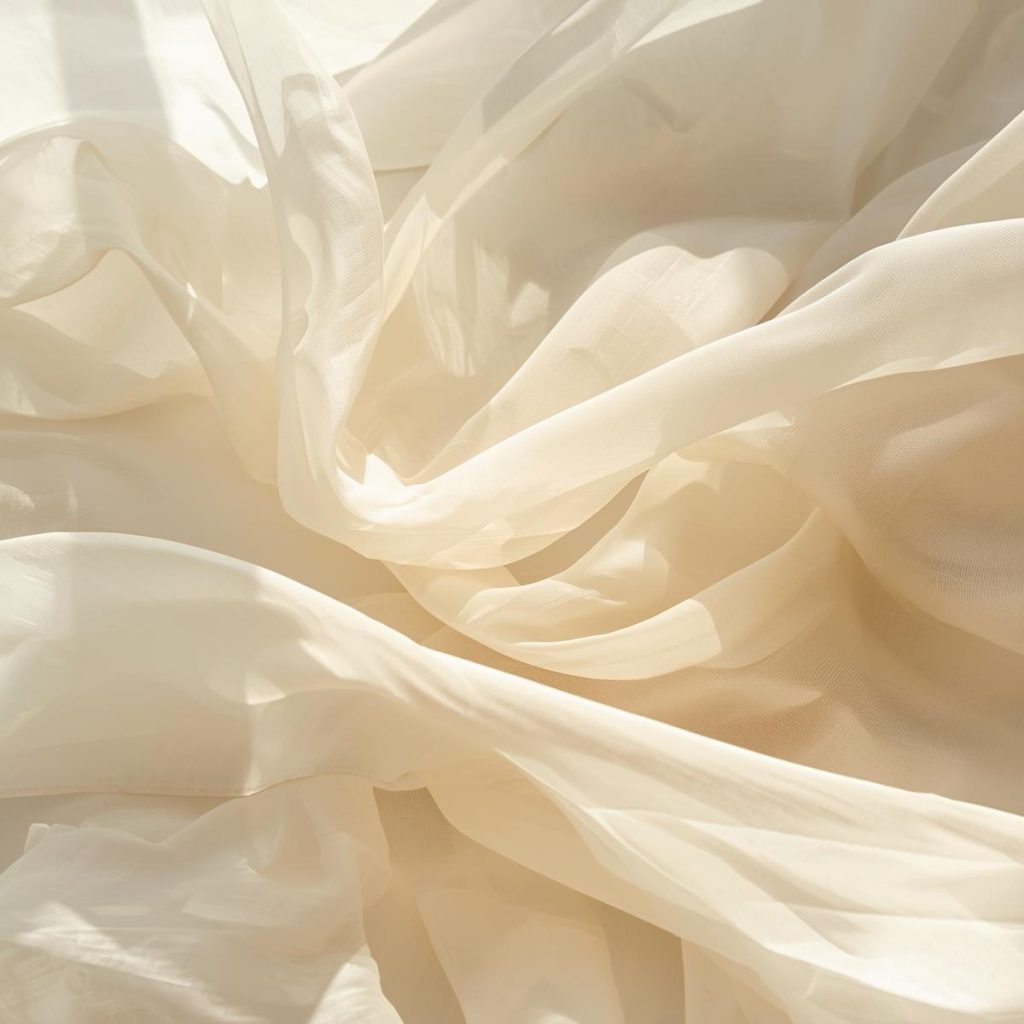
Silk chiffon is a lightweight and sheer silk fabric known for its delicate transparency and airy movement. The fabric flows softly and is often layered to create garments that feel light and ethereal.
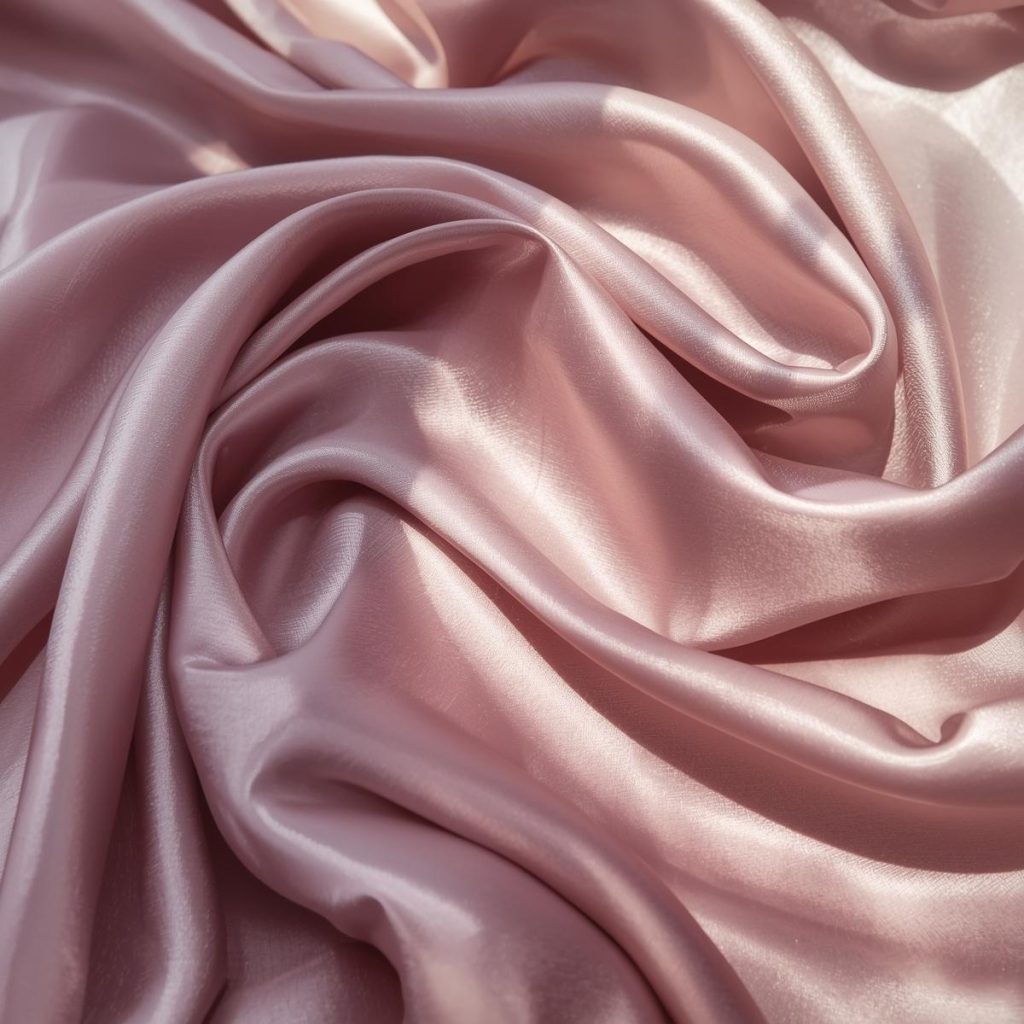
Silk satin is recognized for its glossy surface and exceptionally smooth feel. The satin weave produces a luminous shine while preserving the softness and fluid drape of silk fibers.
Silk dupioni is a textured silk fabric created when irregular silk fibers form small slubs across the surface. These natural variations give the fabric depth and character while maintaining the elegance associated with silk.